
As the products used in solar and storage projects evolve, their new forms affect more than just installation layouts. Third-party logistics companies (3PLs) must adapt to changes in product design as well. A pallet of residential solar panels from 10 years ago was shipped much differently than the 7-ft long panels of today. The same can be said for lithium-based energy storage systems as 20-ft containers become the standard.
Solar Power World reached out to two 3PLs active in the renewable space — One Source Freight Solutions and TRAFFIX — to learn about other industry trends that affect solar and storage project logistics.
As product design evolves, who is responsible for safety planning — the manufacturer, installation contractor or logistics company?
Mark Borgman, president of project solutions, One Source Freight Solutions: The top-tier manufacturers all produce handling guides. We, as part of the process of logistics, are constantly reviewing documentation from people making inverters, transformers, electrical switchgear, everything. The largest EPCs in the country, safety is a big part of what they do. They take the safety of their employees very seriously. The review of those guides is a part of what they do when setting up projects. They have safety meetings on site to talk about how things are supposed to be handled and managed.
Safety on job sites is everybody’s business, and we have safety issues too in terms of transportation and how those things are loaded inside of trucks. We have conversations with manufacturers about what’s the best practice of how this should be handled: should something be blocked or braced, should we use disposable airbags to make sure things can’t move and slide around inside the truck? There’s a lot of consideration that goes into moving things so they can move safely.
What logistics trends do you expect to affect solar and storage projects in the future?
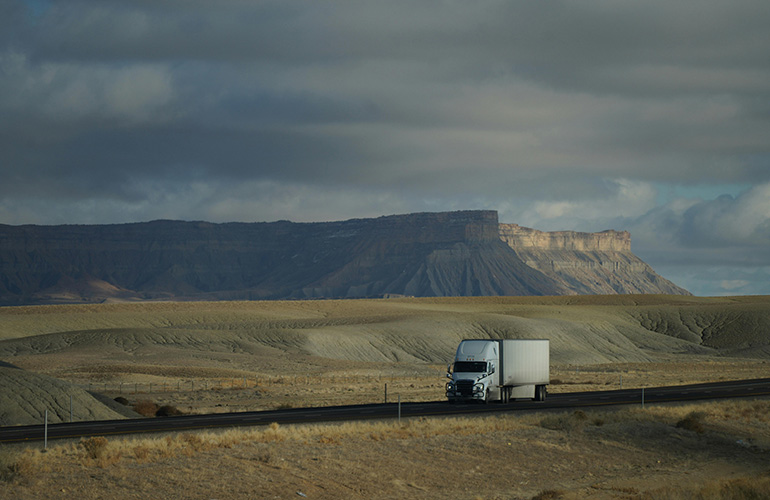 Craig Wadas, director of national accounts, TRAFFIX: Intermodal (using more than one form of transportation) is a topic we’re watching. Solar freight often travels long distances from ports or manufacturing facilities to inland projects. Where the product and schedule allow it, rail can potentially reduce cost and truck dependence on the long-haul portion. TRAFFIX is already seeing increased shipper interest in intermodal as truckload capacity tightens. The main hurdles are at the project site where strict timelines can make intermodal a challenge.
Borgman, One Source Freight Solutions: What I expect to see over the next few years is trucks going to job sites that have no drivers in them. If we look at what’s happening in the transportation industry today — transportation rates are going up dramatically, there’s an increase in the cost of fuel. Something like 90% of trucking companies in the United States are five trucks or less. So, all those mom and pops are going bankrupt. And immigration laws are now being enforced. We’re seeing hundreds, thousands of truck drivers taken out of the workforce. Demand for trucking has gone up, pricing has gone up, and now a reduction in the number of drivers. Robotically driven trucks don’t have to pay for drivers. They can drive virtually 24 hours a day and never take breaks. We expect to see in the coming years a dramatic increase in the number of deliveries made to job sites that are going to be made by autonomously-driven trucks.
We need to understand how that impacts deliveries to construction job sites. How do we communicate schedules, pickup times, delivery changes? You can tell a driver, “Go over here 300 yards, make a hard left turn.” How would this change layouts, laydown yards and staging materials? Maybe a certain job site will not be a good location for an autonomous truck.
What developments in product development and project organization would be helpful for a 3PL?
Wadas, TRAFFIX: One trend I’m really hopeful for is greater transportation management system (TMS) adoption across the solar industry, particularly with manufacturers, developers and EPCs. Solar projects are planned months or even years in advance, but transportation can still be managed relatively reactively once the product is ready to move.
The more we can connect a customer’s enterprise resource planning, inventory data and project schedule with TRAFFIX, the better we can plan ahead. If we know that a project is going to require 300 truckloads over a six-week period, for example, we shouldn’t be finding out about those loads a few days before they need to ship. We should be able to forecast that demand weeks or months in advance, identify the right capacity, plan warehouse releases and build a delivery schedule around what the jobsite can actually receive.
That becomes even more valuable as solar panels get larger, battery systems get heavier and transportation requirements become more specialized. Better TMS adoption gives us visibility into what is coming, where it needs to go and when it needs to arrive. TRAFFIX can then use that information to secure the right equipment and capacity instead of reacting to individual shipments.



Tell Us What You Think!