
For grid-scale solar projects connecting to the bulk electric system, NERC compliance is often treated as a post-construction concern, when the obligations take shape much earlier in the design phase. Waiting until commissioning to address compliance can leave owner-operators scrambling at the commercial operation date (COD), when full regulatory responsibility activates.
Facilities with a rating of at least 20 MVA and a point-of-interconnection voltage of at least 60 kV should consider NERC requirements from the outset. It is important to evaluate project parameters to understand anticipated registration classification as a NERC Generator Owner (GO)/Generator Operator (GOP) Category 1 or 2 for NERC standard applicability and impact level. Most projects will be classified as “low impact;” however, low impact status doesn’t mean there aren’t obligations. Even at this tier, a formal compliance program must be fully operational by COD, covering the NERC operations and planning (O&P) and critical infrastructure protection (CIP) reliability standards as applicable to the project.
Design sets the terms
Early in the process, developers and designers need to define equipment, document settings and build the compliance program framework that will carry the project through to COD. Getting this sequence right while logging the proper documentation the first time avoids rework later. For example, improper design and location of bulk electric system (BES) cyber system equipment can create risk and delays. Proper classification (low or medium) will establish CIP requirements for critical design such as physical security, placement of BES cyber assets, system architecture and many others. The cost of redesign and relocation of BES systems can be very high.
Where installer and developer roles diverge
Credit: Radian Generation
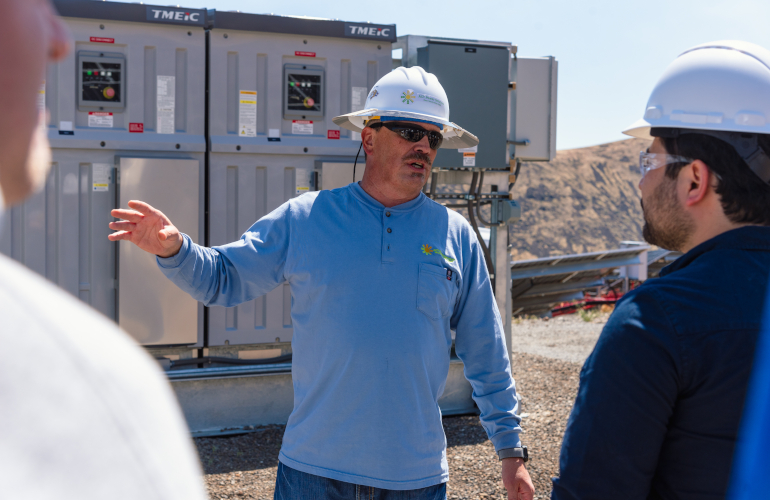
Most compliance obligations attach to design decisions, not construction labor. Installers typically build to the design they’re given rather than making compliance determinations themselves. Their contractual responsibility ends once the project is built and signed off. That does not mean installers are passive, however. Field crews are often the first to notice when delivered equipment doesn’t match the approved design, such as a protective relay with settings different from those specified, or an inverter substituted for a different model. A swapped component can change facility ride-through behavior and require the compliance evaluation to be redone.
Developers need to hand installers clean, complete specification packages that include one-line diagrams, relay settings and approved equipment lists, and installers need a straightforward way to flag deviations as they are discovered, not after the fact. When development and installation are within the same company, the same discipline still applies internally; the design and build teams need a clear handoff process to keep the buildout aligned with what was approved.
Training and the most common installer mistake
A focused 101-level training on how NERC obligations apply specifically to installation work is considered an industry best practice. The single most common misstep on a crew’s first NERC-scoped project is not confirming that the equipment being installed matches the approved design drawings. When a mismatch is caught, installing anyway without first checking back with the design team creates a potential compliance concern. Closing that gap is mostly a workflow fix. Installers need a clear, low-friction way to flag deviations and pause for design sign-off before proceeding.
Ride-through settings carry outsized risk
Credit: Radian Generation
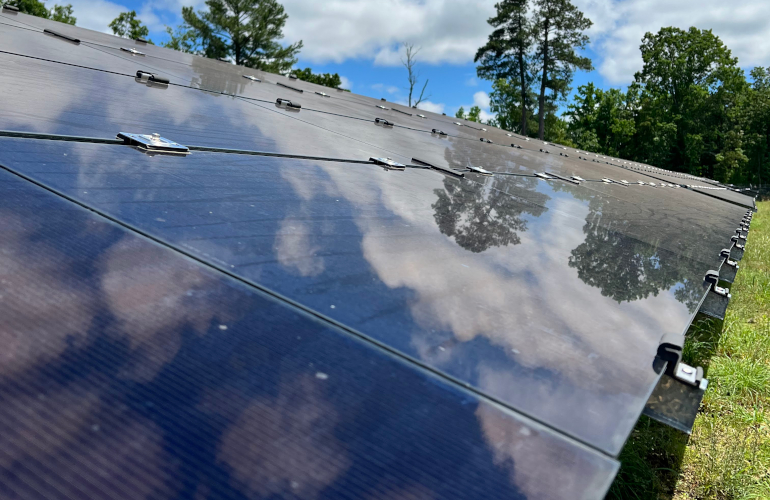
Inverter-based resources (IBR) need to remain connected to the grid through brief voltage or frequency disturbances rather than tripping offline, a capability known as ride-through. This is one of the concepts developers most often underestimate: just how much correct IBR ride-through settings matter, not only for reliability but for compliance itself. If protection settings are overly conservative or lack appropriate time delays, a routine grid fault can be misread as a major failure, causing the inverter to disconnect to protect itself. The risk compounds when many inverters across a region share the same overly sensitive settings and trip simultaneously.
During the Canyon 2 Fire event in California, a transmission line fault caused a brief voltage drop that tripped thousands of solar inverters, removing more than 1,000 MW of generation at once. Similarly, in Texas, the 2021 and 2022 Odessa Disturbance events saw minor 345-kV faults (cleared in a fraction of a second) trigger over 1,700 MW of solar generation to trip offline, some of it 200 miles from the fault. In both cases, the underlying issue traced back to inverter settings established well before the disturbance occurred. NERC Category 2 was largely developed to prevent this from happening again, which is why project EPC contractors need to review, test and record inverter settings during site commissioning.
Documentation that holds up to audit
When it comes time to demonstrate compliance, photos of installed equipment are useful as supplementary evidence, but a structured spreadsheet, mapping each component to its drawing number, location, serial number, relay model, nameplate rating and calibration test results, gives compliance teams and auditors a direct path to verify that installation matches approved design. Oftentimes, third-party compliance service providers have compliance program templates that can shorten this process considerably.
The common thread
Nearly every documented compliance gap traces back to the design phase:
- Lack of adequate engineering oversight/engagement during construction and commission phase testing.
- Relay settings and equipment locations left undocumented
- Incomplete design drawings and equipment packages provided to installers.
Addressing NERC compliance as a design-phase discipline with clearly documented adherence to the standards that includes a well-defined handoff to installers gives projects the best chance of reaching COD ready to register and operate without last-minute scrambling.

Joel Firestone
Joel Firestone, NERC Principal Consultant at Radian Generation – Joel supports NERC compliance program services with over 35 years of experience in power generation, system operation, and regulatory compliance. Joel has developed numerous compliance programs, overseeing 50 + NERC audits, and utilizes a pragmatic perspective on compliance.

Dale Zahn
Dale Zahn, Senior Solutions Specialist for Radian Generation – Dale Zahn has been in the energy compliance industry for over 45 years. He is a former NERC auditor, NERC-certified System Operator, and shift superintendent of two 640 MW generators, and has been an active member of numerous NERC and Regional committees.


Good point that classification should be settled during design. One distinction worth adding for readers: a Category 2 GO/GOP registration does not by itself bring the CIP standards into scope. NERC’s Security Guideline for Inverter-Based Resources says Category 2 IBRs that are not BES facilities are not subject to the existing CIP requirements; their obligations are operations and planning standards such as MOD-032, TOP-003 and VAR-002. CIP applies when the plant is a BES facility (more than 75 MVA in aggregate at 100 kV or above), usually at low impact. For those sites, design is also the time to decide where vendor remote access lands, because CIP-003-9 expects you to know when it is active and be able to disable it. We wrote up the Category 2 standards here: https://gridsafetech.com/blog/category-2-ibr-registration-nerc-standards/?utm_source=solarpowerworld&utm_medium=referral&utm_campaign=reply