
California Gov. Gavin Newsom has signed SB 913 and SB 905, two bills that allow for virtual power plants (VPPs) throughout the state. Together they are the legislative session’s clearest attempt to hold down electricity bills by using equipment installed at homes and businesses rather than expanding utility expenditures which are passed on to customers.
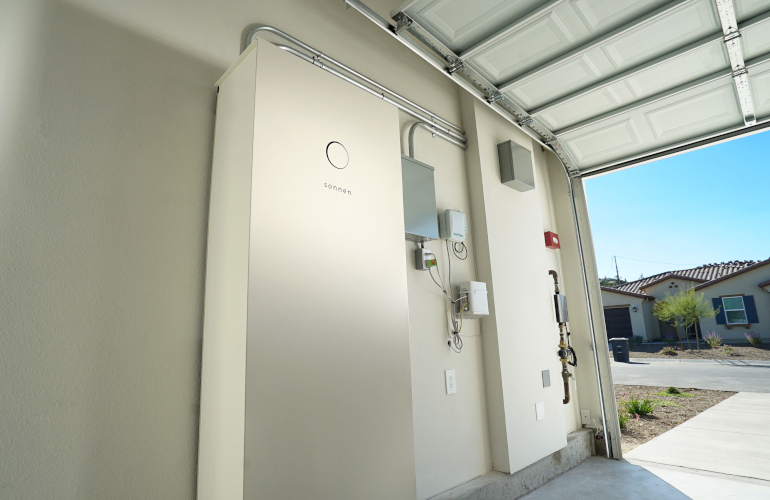
sonnen
“We applaud Gov. Newsom for approving the use of VPPs to reduce the need for utility expenditures,” said CALSSA Executive Director Brad Heavner. “These new tools will make energy more affordable for everybody by getting more usage out of the infrastructure that Californians have already paid for.”
Californians have spent a decade watching their electricity bills climb, while at the same time building one of the largest fleets of local batteries in the world. More than 300,000 customers have installed solar-charged batteries throughout the state, with 2,000 more added every week.
“Customer batteries are already moving electricity usage away from the hours that are most expensive for utilities, but these new laws will take that to another level by operating batteries as a network that can more precisely target the hours when utility costs spike,” added Heavner. “Resources installed on garages and campuses can provide energy cheaper than building new power lines to faraway power plants. It’s crazy for the utilities to spend money on power lines when there is energy stored right in the neighborhoods where it’s needed.”
SB 913 removes arbitrary restrictions for customer batteries bidding into the wholesale energy market. This lowers utility costs because those resources get selected only when they beat the alternatives on price. The law directs the CPUC to establish a valuation methodology for customer-sited batteries that export to the grid during grid stress, so they can qualify for resource adequacy (RA) with the full amount of energy they can dispatch. Fleets of customer devices are currently only allowed to participate in the RA market to the extent those devices reduce the consumption of each individual customer rather than the grid as a whole.
SB 905 makes it visible where the grid has room to spare, so utilities stop spending ratepayer money expanding equipment that sits underused for all but a handful of hours a year. The law establishes a “grid utilization metric” on each segment of the distribution grid, exposing which circuits could host substantially more energy if usage is shifted to off-peak hours during the limited hours of constraint. It gives the CPUC a pathway to require utilization to improve each year. Customer batteries, EV chargers, smart thermostats and other devices would be called on to shift the timing of electricity consumption from the utility electric grid. This could be achieved at lower cost than big grid expansion projects.
What happens next
Harnessing these two VPP laws into electricity bill savings for ratepayers should be a key priority for the incoming governor, and appointing commissioners and staff who will execute on these bills quickly will factor heavily into their success. SB 913 requires the Commission, in coordination with the Energy Commission and the California Independent System Operator, to enhance market-integrated pathways for aggregated distributed resources to qualify as resource adequacy capacity on or before June 30, 2027. Every meaningful implementation decision — how exports are valued, how fleets are measured and settled, how customers enroll — will be made by the next Governor’s appointees, in the first six months of the new term.
“Gov. Newsom has done his part. Implementation of the bill at the CPUC under the next governor will determine whether customers see lower bills. We look forward to working closely with the next governor and his appointees to quickly harness the power of customer batteries to address our affordability crisis,” said Heavner.
Details provided by CALSSA




Tell Us What You Think!