
A new lithium battery energy storage system (BESS) manufacturer opened in the United States in September, and it plans to supply the commercial, industrial and utility-scale markets. NeoVolta Power, a joint-venture between lithium brands NeoVolta and PotisEdge, unveiled its 4-GWh manufacturing site in Pendergrass, Georgia, about one hour northeast of Atlanta. The site is designed to support FEOC-compliant and domestic content-eligible solutions for U.S. project developers.
Solar Power World talked with NeoVolta CEO Ardes Johnson after the factory opening to learn more about the future of BESS manufacturing in the United States.
SPW: NeoVolta started as a residential-focused battery brand. How would you describe NeoVolta today?
Johnson: NeoVolta started in 2018 as a residential battery storage company, founded by Brent Willson in La Jolla, California, with the first system shipping in 2019 and a Nasdaq listing in 2022. For several years the business centered on selling home battery systems like the NV14 through certified solar installers.
That changed when the residential storage market tightened sharply following federal incentive changes. The pullback made clear that a broader footprint was needed — spanning residential, commercial, industrial and utility-scale, and extending from selling equipment to manufacturing it domestically.
Today NeoVolta is best described as a U.S. energy storage manufacturing platform. The path from a residential unit built in a garage to a gigawatt-hour-scale manufacturing line in Georgia has been the central story of the company’s growth.
What BESS components are being manufactured in Pendergrass?
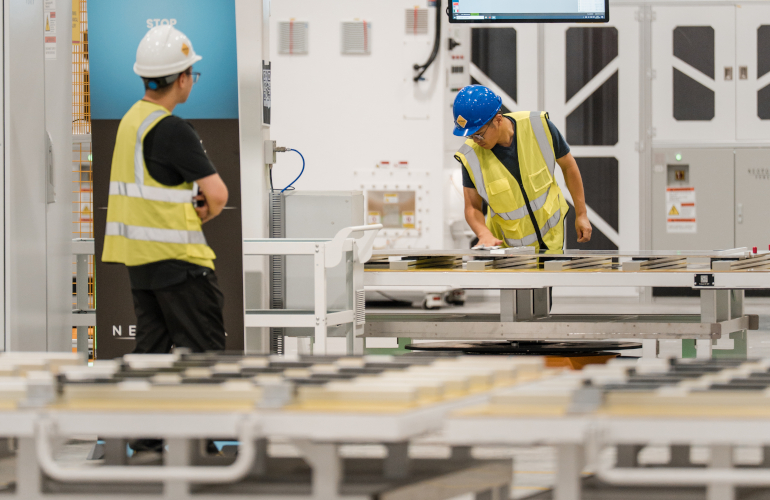
NeoVolta Power manufacturing in Georgia
Pendergrass is a roughly 210,000-ft2 facility on the I-85 corridor in northeast Georgia, operated through NeoVolta Power, the joint venture with PotisEdge, a LONGi Green Energy company. The first production line is a 4-GWh line at full run rate and, as orders warrant, building toward 8 GWh with a second line.
It’s worth being precise about what manufacturing means here, because it goes beyond final assembly. NeoVolta Power has its own battery management system (BMS), storage energy management system (EMS) and intelligent cell contact system (iCCS) — and that combination is the real differentiator, not just mechanical integration. The iCCS sits directly on the battery pack with a voltage and temperature sensor on every cell, catching a cell going bad minutes before it becomes a safety event, confirming a thermal event within about a minute to trigger suppression and trending degradation months in advance — a more automatable, lower-cost design than the wire-harness approach still common across the industry. The BMS draws on EV-grade battery management heritage and handles cell- and pack-level monitoring, active balancing and full protection. The EMS is the layer that lets these systems participate in grid services like frequency regulation and arbitrage, rather than just storing electrons passively.
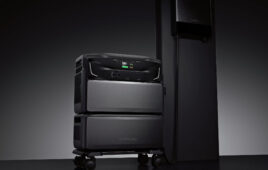
So when cells arrive, the work done in Pendergrass is the engineering value-add: integrating those cells with proprietary BMS, iCCS and EMS hardware and software into a finished, grid-ready pack and container, built and tested on NeoVolta’s own equipment.
What has been the most difficult aspect of setting up BESS manufacturing in the United States?
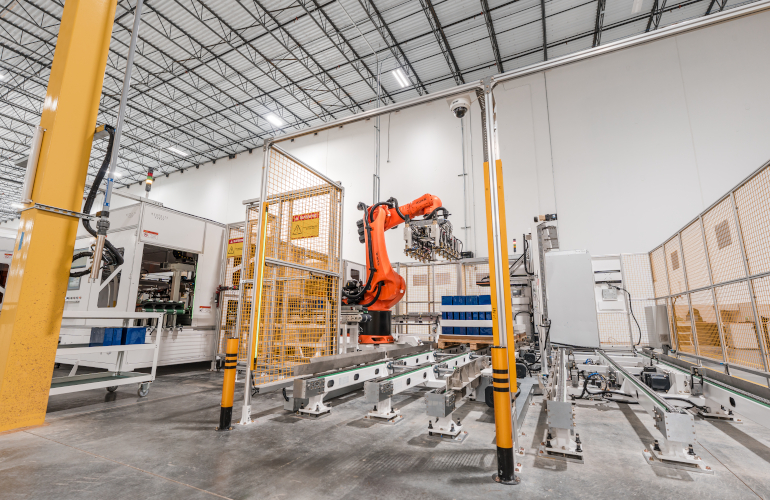
NeoVolta Power manufacturing in Georgia
I’m not sure if difficult is exactly the right word, but there were many challenges that needed to be thought through and solved for. NeoVolta had no prior large-scale manufacturing experience — it was all residential storage — which is why the Pendergrass venture was structured as a partnership rather than a solo build; PotisEdge’s experience brought the equipment installation, commissioning and ramp-up expertise NeoVolta didn’t have in-house. While our plant is highly automated, we are currently staffing up more engineering, facilities, operations and all the supporting talent that will allow us to scale efficiently.
The policy environment around FEOC rules has also been genuinely complex, given that NeoVolta Power’s manufacturing partner has ties to a Chinese parent company. The joint venture had to be structured carefully — with NeoVolta holding the controlling interest, including 100% of the board — to stay compliant, and the rules themselves are still being finalized by the IRS, which complicates planning. Related to that, the domestic cell supply chain isn’t mature yet: U.S.-made cells aren’t abundantly available at the volume or price point needed, so Chinese-sourced cells have bridged the gap in the near term, even as non-FEOC content requirements rise each year toward 2030.
Finally, there’s the operational and financial lift of a first-of-its-kind ramp: commissioning a new line, hiring and training a production workforce, converting pipeline into signed, binding contracts and financing it through a mix of equity, debt and project-level financing — all while the legacy residential business was contracting at the same time.
What are your expectations for the future of battery manufacturing in the United States?
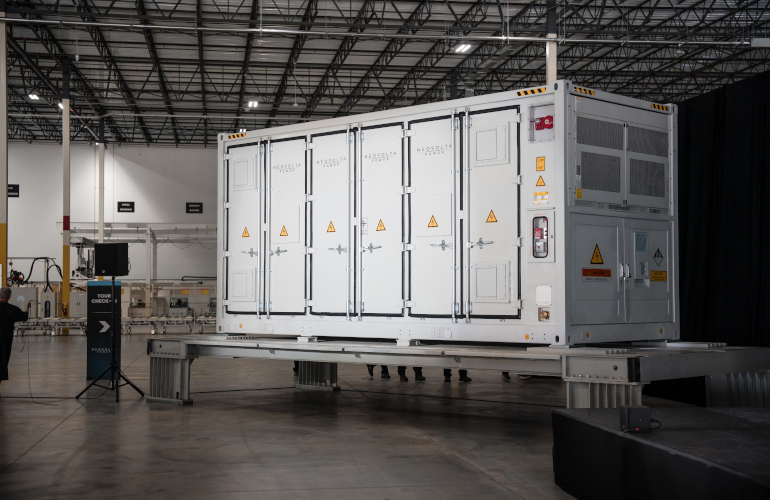
NeoVolta
The U.S. is in the early innings of a real onshoring shift, one likely to happen in stages rather than overnight. Most U.S. manufacturers today, NeoVolta included, still rely on imported cells — first from China, moving toward Southeast Asia and eventually toward domestic cell production as capacity comes online. The SK On agreement illustrates that path: 9 GWh of U.S.-manufactured LFP cells from 2027 to 2031, with a framework that could scale to 18 GWh.
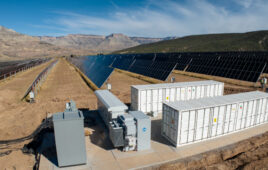
But the cell is only one piece of the value chain, there are other components where differentiation also matters. A lot of manufacturers still treat the DC block like little more than a container of batteries — cells, a basic BMS and not much else. NeoVolta builds it differently: BMS, EMS and iCCS are engineered directly into the DC block, so products like NVAPEx carry real power electronics and controls — cell-level safety monitoring, active management and grid-facing intelligence — rather than a passive box of cells.
That expertise also points to where the product roadmap is headed. On the C&I side, NVGAIN already pairs that same BMS/EMS/iCCS foundation with an integrated PCS. The plan is to carry that power electronics expertise forward into a PCS-equipped version of the utility-scale platform as well, bringing the level of integration proven out in NVGAIN up to grid scale.
At the end of the day, for the next three-to-five years, policy will keep driving the pace, and it’s one of the few things that cuts across the aisle in Washington right now. NeoVolta continues to have conversations with policymakers on both the Democratic and Republican sides, and whatever else divides them, there’s no real constituency arguing for fewer U.S. manufacturing jobs or deeper dependence on Chinese battery supply chains. That’s part of why the non-FEOC content thresholds rising through 2030 have staying power regardless of which party holds the White House or Congress — they’re forcing the supply chain to localize on a set timeline, whether or not the economics are fully there yet. Demand isn’t the constraint either — grid modernization, utility-scale storage and increasingly data center power needs are pulling hard on this market. The companies that combine real power electronics engineering now with a credible path to domestic cells over the next three to four years are positioned to come out ahead.


Tell Us What You Think!