
Pila Energy, maker of a plug-in mesh home battery, is launching two new ways for New York City residents to access battery storage for backup power and manage energy usage: a pilot program with Brooklyn SolarWorks pairs rooftop solar with plug-in battery storage; and Pila Neighborhoods, a community program where neighbors unlock group savings on batteries for their block or building.
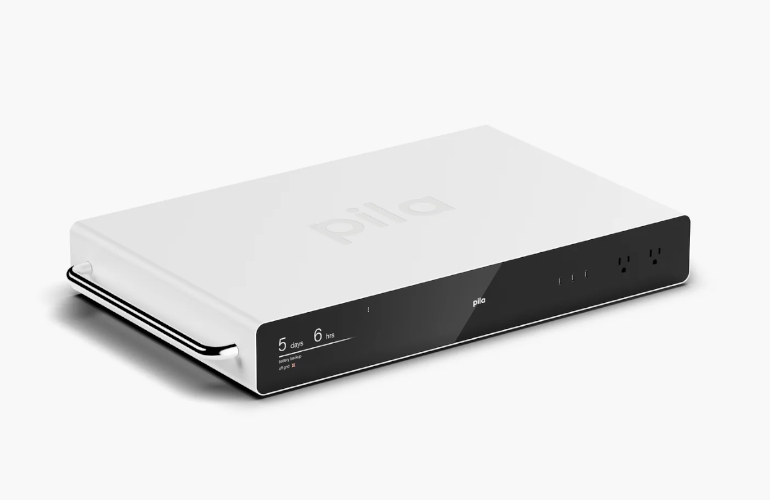
The 1.6-kWh Pila mesh home battery is listed at $1,499.
Across the five boroughs, residents have mostly been unable to access backup battery storage, as code restrictions and complex permitting have kept traditional whole-home batteries out of reach. Pila’s plug-and-play design reimagines home battery backup as an appliance, without the construction or electrical work required by traditional systems.
With or without solar, Pila can charge when electricity costs less and supply connected appliances when rates are highest. Paired with Brooklyn SolarWorks’ decade of engineering rooftop solar for the city’s most difficult buildings, the combination helps New York households use more of the power they generate and keeps essential appliances running from stored energy when the grid goes down.
“New York is one of the hardest places in America to electrify a home, and we’ve spent a decade proving it can be done,” said T.R. Ludwig, CEO and co-founder of Brooklyn SolarWorks. “We’ve put solar on rooftops other companies wouldn’t touch, but storage has always been the missing piece. This pilot shows New Yorkers can finally have both.”
Pila plugs into a standard 120-V outlet and protects vital appliances, such as refrigerators, Wi-Fi routers, window air conditioners or medical devices, in the event of an outage. Households in Brooklyn and Queens are already pairing existing Brooklyn SolarWorks panels with Pila batteries, storing power their panels generate for use during peak hours when electricity is most expensive, and creating a backup layer that allows rooftop solar to keep serving essential devices if the grid goes down.
For those outside the Brooklyn SolarWorks pilot, Pila Neighborhoods is a national program that opens a second path to backup storage. Inspired by the connected technology of Pila’s mesh network, Pila Neighborhoods brings communities together to organize around shared demand, unlocking group savings as more households on a block or in a building join.
“Resilience compounds. One Pila protects a family; a building full of them starts to protect the neighborhood,” said Cole Ashman, Pila CEO and founder. “New York has always looked out for its own, across stoops and shared walls. Pila Neighborhoods turns that instinct into a practical path to backup power — neighbors organizing together, lowering costs together, and building resilience together.”
News item from Pila


I am a landlord and have Brooklyn solar panels on my roof which power my apartment and the public halls. I have a huge bank of Kw from con ed. If I were to get a Pila battery could I give that power to my two tenants ?
The resilience case for a 1.6-kWh plug-in battery is easy to defend. A fridge, a router and a medical device through an outage, with no load calculation and no permit fight in a Brooklyn walk-up, is a real product solving a real problem. T.R. Ludwig is right that storage has been the missing piece for that housing stock.
The line I would put a number on is the peak-shaving pitch. At 1.6 kWh you move about 1.6 kWh out of the peak window per cycle, less round-trip losses. Even at a generous 20 cent spread that is roughly 30 cents a day, and only on days you actually cycle it. That is not a payback story on $1,499, and it does not have to be. I ran the 8,760-hour version of this on Florida’s time-of-use rate and the same two things decided it: usable capacity and charge rate. Most published savings claims also use the wrong off-peak number.