
The Rural Energy for America Program (REAP) is being updated with new and longer stipulations for renewable energy projects to qualify for these grants.
Historically, REAP has provided grants to rural farmers and small business owners for renewable energy projects. The program gave grants valued at 25% of a qualifying project’s cost, and the Inflation Reduction Act boosted that to 50%.
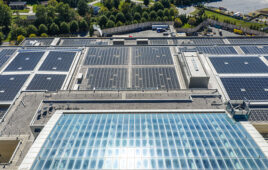
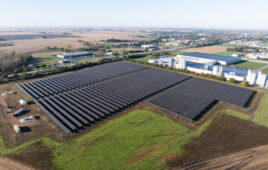
The USDA published an update to REAP in the Federal Register this morning that will take effect on Oct. 16. The update outright prohibits ground-mounted solar projects built on farmland from being eligible for REAP grants. Rooftop solar is allegedly eligible.
Additionally, renewable energy and energy efficiency projects applying for REAP grants no longer do so ahead of time. A solar project must already be built, and at least 12 months of “pre-installation data” and 12 months of production data must be submitted to apply.
“This new approach changes the program to a post-completion, performance-validated model,” the document reads. “All [renewable energy system] … awards will now be based on actual documented output, energy savings, costs and system performance.”
Multi-site projects cannot qualify, and neither can systems using components from prohibited foreign entities.
The document states that REAP grants for renewable energy projects can range from $1,500 to $500,000. However, a single grant can only cover 25% of a project’s total cost. This can apply to both retrofits and new projects.
This alteration to REAP continues the Trump administration’s policy actions centered on American farmers, which expressed the intent to disincentivize building renewable energy sources on farmland.
Last year, the USDA cut funding to solar and wind project construction on rural land. That included the department’s Development Business and Industry Guaranteed Loan program, and for REAP, it set a 50-kW limit on ground-mounted solar projects.
REAP grants have been a boon to new solar output in rural regions of the United States. Some solar contractors have relied on these grants to not only build new solar, but make the payback period on PV projects significantly shorter for farmers and businesses working within narrow operating margins.
This forthcoming REAP update is accompanied by a public comment period, however, it acknowledges that these changes can be made without public input.

There is some real irony in this USDA REAP change.
For years, the program has helped farms, agricultural producers and rural businesses reduce energy costs and improve operating margins. In many cases, that has meant investing in productive assets that lower overhead for decades. That matters even more in today’s environment.
Electricity costs are rising sharply, inflation has increased the cost of doing business, and farmers are being asked to absorb higher expenses across nearly every part of their operation. Those increased energy costs are ultimately felt throughout the entire supply chain.
The new REAP grant rules make on-site energy investment harder.
Most behind-the-meter farm solar projects are ground-mounted for practical reasons. They are typically placed on relatively small areas that are suitable for interconnection and often represent some of the least productive ground on the property. Hog and poultry barns, in many cases, are simply not structurally suitable for rooftop solar.
The new funding structure creates another hurdle. Requiring a business to fully finance and complete a project, operate it long enough to establish performance, and then compete for a grant afterward is a very different program from the one many rural businesses have relied on to help make these investments possible in the first place.
There may be a case for tighter qualification standards, proper system sizing and performance verification. Those are reasonable goals.
However, there is a big difference between improving a program and making it materially less useful to the businesses it was designed to help.
At a time when energy affordability is becoming a larger issue for rural America, I am not convinced this is the right direction.