

By
On December 23, 2021, President Biden signed into law H.R. 6256, known as the Uyghur Forced Labor Prevention Act. The act is intended to stem the importation of goods made with forced labor from the Xinjiang Uyghur Autonomous Region of the People’s Republic of China into the United States. The act provides additional enforcement tools to supplement already existing protections against the import of goods produced by forced labor.
Implementation of the Act
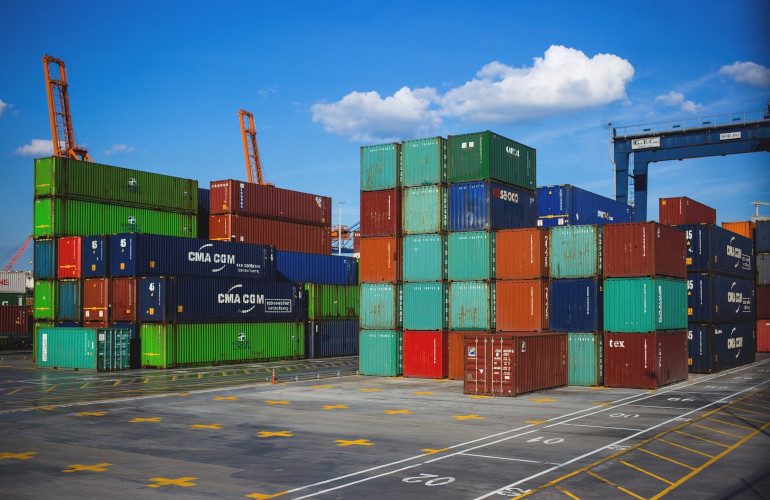 The act directs a federal task force to develop a strategy for addressing importation of goods mined, produced or manufactured in whole or in part using forced labor in China. This strategy is to be developed over an approximately four-month period and will include solicitation of public comments and a public hearing. The task force will submit a report outlining its strategy within six months after enactment of the act. The report must also include the following:
- A list of entities in the Xinjiang Region that mine, produce or manufacture wholly or in part any goods, wares, articles and merchandise with forced labor;
- A list of entities working with the government of the Xinjiang Region to recruit, transport, transfer, harbor or receive forced labor or Uyghurs, Kazakhs, Kyrgyz or members of other persecuted groups out of the Xinjiang Region;
- A list of products mined, produced or manufactured wholly or in part by entities on the list required by clause (i) or (ii);
- A list of entities that exported products described in clause (iii) from the People’s Republic of China into the United States;
- A list of facilities and entities, including the Xinjiang Production and Construction Corps, that source material from the Xinjiang Region or from persons working with the government of the Xinjiang Region or the Xinjiang Production and Construction Corps for purposes of the “poverty alleviation” program or the “pairing-assistance” program or any other government labor scheme that uses forced labor;
- A plan for identifying additional facilities and entities described in clause (v);
- An enforcement plan for each such entity whose goods, wares articles or merchandise are exported into the United States, which may include issuing withhold release orders to support enforcement of section 4 with respect to the entity;
- A list of high-priority sectors for enforcement, which shall include cotton, tomatoes and polysilicon; and
- An enforcement plan for each such high-priority sector. (emphasis added)
The task force will also provide importers of products potentially sourced using forced labor with additional guidance on how to identify and trace such products to limit their entry into the United States and to aid importers in locating and obtaining products that avoid the use of forced labor from regions or countries of concern. The guidance will include the following:
- Due diligence, effective supply chain tracing and supply chain management measures to ensure that such importers do not import any goods mined, produced or manufactured wholly or in part with forced labor from the People’s Republic of China, especially from the Xinjiang Region;
- The type, nature and extent of evidence that demonstrates that goods originating in the People’s Republic of China were not mined, produced or manufactured wholly or in part in the Xinjiang Region; and
- The type, nature and extent of evidence that demonstrates that goods originating in the People’s Republic of China, including goods detained or seized pursuant to section 307 of the Tariff Act of 1930 (19 U.S.C. 1307), were not mined, produced, or manufactured wholly or in part with forced labor.
The Act’s “Rebuttable Presumption” Provisions
With respect to any goods, wares, articles and merchandise mined, produced or manufactured wholly or in part in the Xinjiang Region or produced by the entities listed in the report to Congress (see (i), (iii), (iv) and (v) above), the act provides that the Commissioner of U.S. Customs shall apply a presumption that such goods are produced in violation of Section 307 of the Tariff Act (covering prohibition on importation of goods using forced labor) and are barred from entry into the United States. The Commissioner will apply this “rebuttable presumption” unless it determines (1) that the importer of record has (A) fully complied with the guidance described above and any regulations issued to implement that guidance, and (B) completely and substantively responded to all inquiries for information submitted by the Commissioner to ascertain whether the goods were mined, produced, or manufactured wholly or in part with forced labor; and (2) by clear and convincing evidence, that the good, ware, article or merchandise was not mined, produced or manufactured wholly or in part by forced labor.
Challenges for the Solar Industry

Polysilicon
The act’s emphasis on the polysilicon sector will have a substantial impact on the solar PV module market in the coming months. Indeed, in anticipation of the act’s passage (and following the Commerce Department’s addition to its Entity List of banned importers several Xinjiang Region-based silicon producers this past summer), many solar PV developers and contractors have already shifted away from procuring PV modules from manufacturers with known connections to the Xinjiang Region, where a significant amount of raw polysilicon is sourced. There remains a great deal of uncertainty, however, over which entities will be named to the list for which the act’s “rebuttable presumption” applies – a question that will undoubtedly be hotly debated given the consequences. Listed entities may have to severely limit their presence in the U.S. market, or even find it impossible to maintain any presence and exit the United States altogether.
Solar PV developers and contractors should consider immediate mitigation measures to avoid the potentially catastrophic impacts of their projects being implicated in forced labor concerns, including violations of the act. Prudent mitigation measures may include:
- Implementing robust supply chain traceability audit programs of PV module manufacturers to identify potential areas of concern regarding forced labor;
- Engaging with PV module manufacturers in immediate due diligence of their polysilicon sourcing, including addressing any potential risk of Section 307 enforcement;
- Examining and ensuring forms of performance security from PV module manufacturers (e.g., bonds, letters of credit, etc.) to provide adequate recourse in the event of a default, particularly where manufacturers have a limited U.S. presence;
- Identifying and developing relationships with alternative PV module manufacturers to diversify procurement options in the event PV modules need to be replaced or substituted due to an import ban; and
- Restricting or delaying PV module purchases where possible pending better clarity and certainty on how implementation of the act will proceed.
Compliance Programs for Managing International Trade
As demonstrated by the challenges the solar industry faces with regard to the act, there is no “one-size-fits-all” approach to legal compliance programs for managing international trade. SEIA has developed its own solar supply chain traceability protocol and encourages its members to sign the Solar Industry Commitment to Environmental & Social Responsibility.
In addition to PV module procurement in the solar industry, it is likely that other sectors of the renewable energy industry will be impacted by the act as its implementation process begins: As one example, lithium mined in the Xinjiang Region and sourced for battery energy storage systems may be subject to the same increased scrutiny on imports under the act.
We can continue to expect understandable concern, and related policy shifts, on human rights issues throughout the global trade industry in the years to come. In order to ensure supply chain integrity and mitigate the risks of violating trade regulations and sanctions laws, PV developers and contractors should consider implementing robust internal compliance programs consistent with risk-based guidance from the Office of Foreign Assets Control (OFAC) (the Treasury Department’s administrator of sanctions programs).






The ‘problem’ with all of this is there is nothing the U.S. can do about China setting up a transportation corridor or using an existing transportation corridor like a railway between maligned Xinjiang Region and say the not maligned Ginghai or Gansu region. Keep two sets of books, one for the Communist Party of China, then ship these materials to Ginghai or Gansu then to the U.S. with made in Gansu stamped on the shipping container. What will work is find another manufacturer with a clear supply chain in another country or building one’s own supply chain in the country where the products will be manufactured and consumed. Relying on China for manufacturing and materials for manufacturing is a fool’s errand.
“There remains a great deal of uncertainty, however, over which entities will be named to the list for which the act’s “rebuttable presumption” applies”.
The Biden, and Pelosi and other prominent Democrat and some Republican politicians (McConnell) are knee deep in investing in the the Green Energy sector. I wonder if their investments will be placed on the “rebuttable presumption” list? LOL. China is our enemy. We should place an embargo on all products from this murderous communist dictatorship.