Solar Power World

  • Home
  • Top Solar Contractors
  • Articles
    • Most Recent Posts
    • News
      • Latest News Items
      • SPW State News Hub
      • IRA/OBBBA coverage
      • Solar tariffs
      • U.S. manufacturing updates
    • Featured
      • Latest Feature Stories
      • Benchmarking U.S. Solar Manufacturing
      • SPW’s Rising Stars
      • Trends in Solar
      • The Solar Explorer
  • Policy
    • Latest policy headlines
    • IRA/OBBBA Coverage
    • Tariffs and Court Cases
  • Markets
    • Residential
    • Commercial
    • Community Solar
    • Utility
    • Storage
  • Products
    • 2026 Top Products application
    • Winners of SPW’s 2025 Top Products
    • Batteries and Storage
    • Electric Vehicle (EV)
    • Inverters
      • U.S. solar inverter manufacturers
    • Racking and Mounting
      • U.S. solar mounting manufacturers
    • Software
    • Solar Panels
      • U.S. solar panel manufacturers
  • Resources
    • About SPW
    • Digital Issues
    • Event Coverage
    • Podcasts
    • Product Manufacturing Locations
      • U.S. solar inverter manufacturers
      • U.S. solar mounting manufacturers
      • U.S. solar panel manufacturers
    • Solar Classrooms
    • Suppliers
    • Videos
    • Views
    • Voices
    • Webinars / Digital Events
    • Whitepapers
  • 2026 Leadership
    • 2025 Winners
    • 2024 Winners
    • 2023 Winners
    • 2022 Winners
  • Advertise
  • Subscribe

String inverters replacing central for increasingly larger projects

By Kathie Zipp | May 6, 2016

Share
1-MW installation on California Goodyear Rubber Manufacturing Facility by REP Solar with Yaskawa – Solectria Solar inverters.

1-MW installation on California Goodyear Rubber Manufacturing Facility by REP Solar with Yaskawa – Solectria Solar inverters.

More installers are choosing string inverters over central models in solar projects smaller than 1 MW. IHS estimates that low-power (less than 99 kW) inverters accounted for nearly 20% of total shipments to utility-scale projects in 2015, an increase of 12 percentage points compared with 2014.

“String inverters are increasing in size due to advances in technology which can allow increased power densities and smaller sizes,” said Cormac Gilligan, research manager – PV inverters at IHS Technology. “This helps reduce the weight and physical size of inverters so they can install quickly and easily in roof- and ground-mount PV installations. As rooftop solar continues to grow globally, installers and EPCs are increasingly taking advantage of the benefits of string inverters.”

Yaskawa – Solectria Solar, which offers both string and central models, is seeing this trend first hand. “In today’s market, the initial price of installing string inverters is typically more economical than central for projects up to a certain size,” said Emily Hwang, the company’s senior applications engineer. “When the inverter size grows, so does the maximum size of the projects where string inverters work financially.”

Also, a growing number of three-phase, low-power inverter manufacturers are partnering with other PV balance-of-system suppliers, especially mounting companies, to further simplify installations. IHS expects these partnerships to increase in the next couple of years to reduce labor and total PV system costs.

While IHS also estimates global shipments of three-phase, low-power inverters will grow from about 13 GW to 30 GW by 2019, central inverters are still the popular choice for projects greater than 1 MW.

Hwang doesn’t see central inverters disappearing from commercial and small utility markets anytime soon. “Central inverters are a good choice if the installer will own the project after commissioning, and if the site is easily accessed via truck,” she said. “Less parts to a project means less to fail and thus less truck rolls.”

Carlos Lezana of Ingeteam’s marketing and communications, another manufacturer of string and central inverters, said the final choice often comes down to cost. “Nowadays, string inverters are more economic in PV plants with an output power up to 1 MW,” he said. “In addition, a distributed scheme minimizes production losses in case of inverter failure. Furthermore, operation and maintenance is cheaper and easier with string inverters. But this scenario changes if we analyze PV installations with a greater power output.”
Comments

  1. DoRightThing says

    May 8, 2016 at 11:22 am

    Some technical details would be nice.
    I guess a “string inverter” is a small, perhaps ~1kW inverter at the end of a string, (or group of strings), with the output kept in phase somehow with lots of others in parallel to provide many kilowatts.
    Could be nasty if a string inverter fails and gets fried by the others unless they are protected by massive diodes.

    Reply

Tell Us What You Think! Cancel reply

Related Articles Read More >

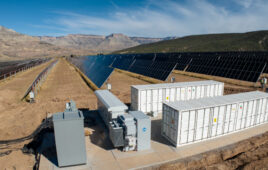
4-hour battery storage is cheaper to install than gas turbines all across globe
From broken panels to responsible recovery: Green Clean Solar leads industry recycling efforts
AMMP launches AI coworker for renewable energy asset managers
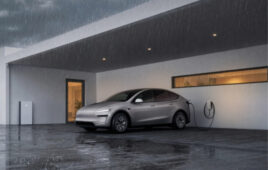
Tesla’s full EV lineup can now also provide home backup energy
“spw
 
“the-informed-solar-installer”
“solar
“spw
Don't miss a thing!
SPW brings you the must-read stories each morning in our special newsletter.

SPW Podcast

“solar
Solar Power World
  • Top Solar Contractors
  • Top Products
  • Leadership
  • Solar Articles
  • About/Contact Us
  • Subscribe
  • Advertising
  • Arrowfly LLC

Copyright © 2026 Arrowfly LLC. All Rights Reserved. The material on this site may not be reproduced, distributed, transmitted, cached or otherwise used, except with the prior written permission of Arrowfly LLC
Privacy Policy | RSS

Search Solar Power World

  • Home
  • Top Solar Contractors
  • Articles
    • Most Recent Posts
    • News
      • Latest News Items
      • SPW State News Hub
      • IRA/OBBBA coverage
      • Solar tariffs
      • U.S. manufacturing updates
    • Featured
      • Latest Feature Stories
      • Benchmarking U.S. Solar Manufacturing
      • SPW’s Rising Stars
      • Trends in Solar
      • The Solar Explorer
  • Policy
    • Latest policy headlines
    • IRA/OBBBA Coverage
    • Tariffs and Court Cases
  • Markets
    • Residential
    • Commercial
    • Community Solar
    • Utility
    • Storage
  • Products
    • 2026 Top Products application
    • Winners of SPW’s 2025 Top Products
    • Batteries and Storage
    • Electric Vehicle (EV)
    • Inverters
      • U.S. solar inverter manufacturers
    • Racking and Mounting
      • U.S. solar mounting manufacturers
    • Software
    • Solar Panels
      • U.S. solar panel manufacturers
  • Resources
    • About SPW
    • Digital Issues
    • Event Coverage
    • Podcasts
    • Product Manufacturing Locations
      • U.S. solar inverter manufacturers
      • U.S. solar mounting manufacturers
      • U.S. solar panel manufacturers
    • Solar Classrooms
    • Suppliers
    • Videos
    • Views
    • Voices
    • Webinars / Digital Events
    • Whitepapers
  • 2026 Leadership
    • 2025 Winners
    • 2024 Winners
    • 2023 Winners
    • 2022 Winners
  • Advertise
  • Subscribe